Since the European Union's General Data Protection Regulation (GDPR — Regulation (EU) 2016/679) began to apply in 2018, a new generation of personal data protection laws built on a similar model has spread across Asia, the Middle East and Latin America: Brazil's LGPD (in force since 2020), China's PIPL (2021), the UAE's PDPL (2021), Indonesia's PDP Law (Law No. 27 of 2022), India's DPDP Act (2023), and Saudi Arabia's PDPL. These frameworks set strict requirements in several areas — data-subject consent, breach notification, data protection impact assessments — and particularly around transferring personal data outside the national territory, which is exactly where the Local AI architecture shows its clearest advantage.
Many of these laws read "cross-border personal data transfer" very broadly. It's not just about actively sending data abroad — using a platform whose servers sit in another country to process data collected at home, or letting that data be accessed from abroad, can count too, even if the business never actively "sent" the data anywhere. In other words, most cloud AI services — with servers anywhere outside the country where the business operates — typically fall under cross-border transfer obligations.
Once a business falls into that category, depending on the law, it may face a whole set of extra obligations: a legal basis or explicit consent for the transfer, a data protection impact assessment (DPIA) or transfer impact assessment, standard contractual clauses or a filing with the regulator — real legal procedures that take time and expertise many businesses, especially small and mid-sized ones, aren't prepared for. Some laws carve out exemptions or allow easier transfers to countries recognized as offering an equivalent level of protection, but most common uses of cloud AI involving customer or personal data still can't avoid those obligations.
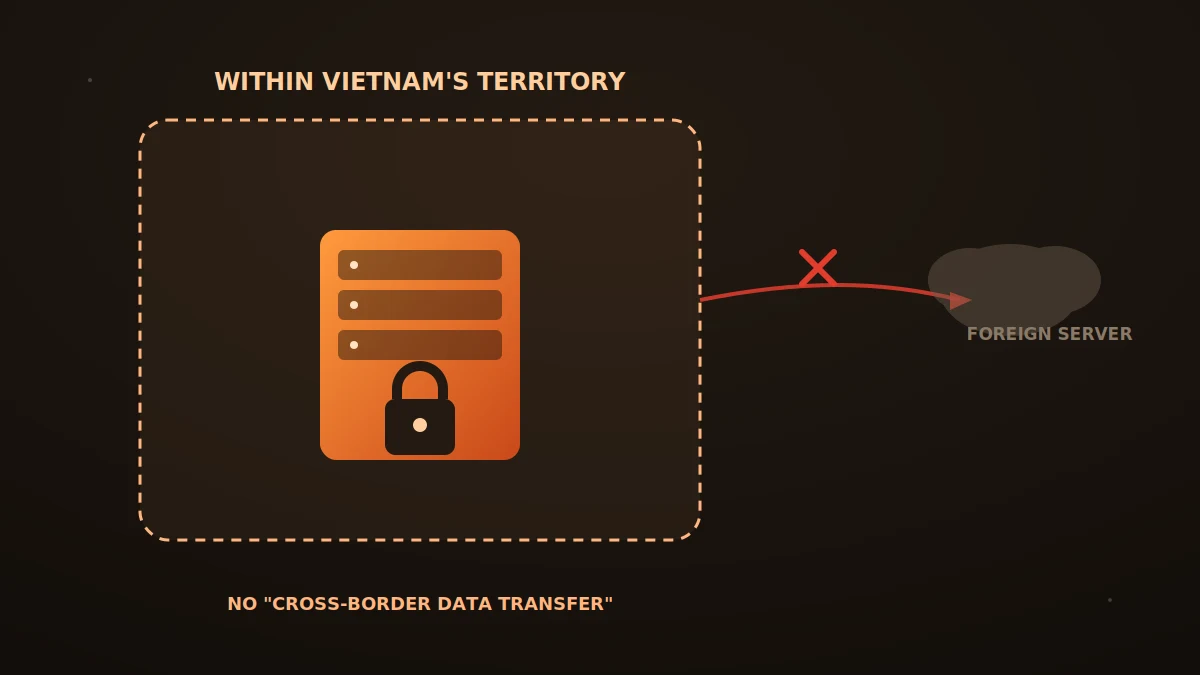
This is exactly where Local AI sidesteps the whole problem. Because the AI model and all its data run entirely on infrastructure located at the business itself, within the country where it operates, no data is ever sent to a foreign storage system, and no overseas-hosted platform is ever involved in processing it — meaning cross-border transfer rules simply don't apply. There's no impact assessment dossier to file for a cross-border transfer, because that transfer never happens.
Some laws also offer flexibility or transition periods for small businesses and startups on certain obligations like impact assessments or appointing a data-protection officer or team. But for larger businesses, or ones handling a meaningful volume of customers' personal data, avoiding the "cross-border transfer" category entirely from the start remains the path with the least legal risk.
For DABO, this compliance advantage isn't a bolted-on feature — it's a natural consequence of the Local AI architecture itself: data stays within the business, within the country where it operates, start to finish. Combined with the security layers covered in earlier articles (network isolation, encryption, access control), DABO's customers get a system built to align with the new generation of data protection laws at the technical foundation, rather than needing a separate compliance project afterward. (This content is general legal information — businesses should consult a lawyer or their legal department to apply it correctly to their specific situation.)