What is on-premise (local) AI?
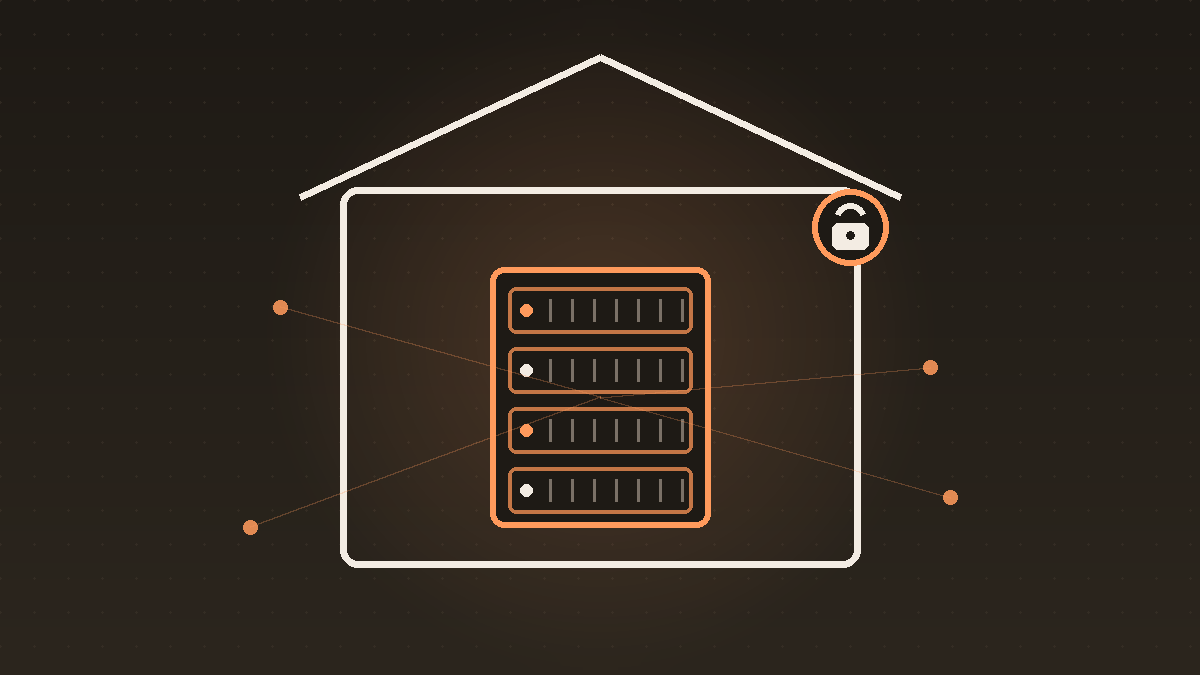
On-premise AI — also called local AI or internal AI — is a deployment model where AI runs directly on hardware the business owns or privately leases (an on-site server, or a dedicated private cloud), instead of calling an API on a shared AI platform over the internet. The entire process — from the model reading data, to inference, to returning results — happens within infrastructure the business controls. Data never leaves the internal system throughout that process.
This is the core difference from cloud AI (such as calling a major model provider's API directly): with cloud AI, every question or piece of data sent passes through a third party's infrastructure, and no matter how strong the encryption or security commitments are, the business still has to trust that party's security policy and capability.
How does local AI differ from cloud AI? Criteria On-premise (local) AI Cloud AI (shared API) Where data is processed Internal business infrastructure Third-party server Does data leave the business? No Yes (via API) Cost Upfront investment (hardware), then stable monthly cost Pay-per-use (token/request), scales with volume Deployment speed Requires setup and configuration time Near-instant Model customization control Full customization around industry data Limited by the provider's API Best suited for Sensitive data, tightly regulated industries (finance, healthcare, law) Fast prototyping, non-sensitive data volumes When should a business choose local AI?
Local AI fits best when a business falls into one or more of the following situations:
Customer data is a sensitive competitive asset — customer lists, negotiated prices, transaction records — where even an accidental leak could cause serious damage. The industry has strict regulations on where data is stored — finance, banking, insurance, healthcare, law — where data leaving the country or internal infrastructure could violate regulations. Usage volume is high enough that API costs exceed infrastructure investment — with high-frequency use (e.g., a customer-service chatbot running 24/7), cloud AI's token-based costs can quickly outpace the cost of a fixed monthly GPU server. Deep customization around the industry's own data and processes is needed — local AI allows training/fine-tuning the model to the exact business context, instead of relying on a shared general-purpose model.
Conversely, if a business only needs small-scale testing with non-sensitive data, or doesn't yet have enough usage volume to make the infrastructure investment cost-effective, cloud AI remains the more practical choice at the early stage.
The real cost of deploying local AI
The biggest barrier holding many small and mid-sized businesses back from local AI is the misconception that it requires massive infrastructure. In practice, a reasonable starting point can be just a single GPU-equipped server — enough to run a customer-service AI assistant or an internal data-analysis assistant at a moderate scale. Costs then stabilize on a monthly basis (operations, maintenance), unlike cloud AI's usage-based pricing, which becomes harder to predict as traffic grows.
How DABO deploys local AI
DABO provides a Local AI and AI Agent platform that runs directly on a business's infrastructure, focused on the two most common use cases:
Customer-service AI Agent — operates 24/7, automatically answers most repetitive questions, and cuts response time to under thirty seconds, while all conversations and customer data stay within the internal system. Internal data-analysis AI Agent — compiles sales and operational reports in real time, helping businesses make decisions based on data instead of gut feeling, without pushing business data to an external platform.
DABO acts as the single point of contact — consulting, deployment, operations — so the business doesn't need to build its own in-house AI engineering team.
Frequently asked questions
Is on-premise AI more expensive than cloud AI? The upfront cost is higher (hardware investment), but with high and steady usage, the total long-term cost is usually lower than cloud AI since there's no per-API-call billing.
Can small businesses afford to deploy local AI? Yes — with a small starting configuration (a single GPU server), small and mid-sized businesses can fully deploy local AI without an in-house AI team, provided they have a full-service deployment partner like DABO.
Can local AI be updated with new knowledge like cloud AI? Yes, depending on configuration — a local model can still be updated and fine-tuned periodically with the business's new data and knowledge, even without the continuous internet connection cloud AI relies on.